Black Forest Supplements · Cocoa + Nattokinase launch · Slot 02 · Secret Revealed · draft
What Nobel Prize Winner Dr. Furchgott Found
Product-free. Modelled beat for beat on “What Dr. Sumi Found, and What They Buried for 40 Years” (May 22): the dateline discovery, the old thing hiding in plain sight, what it does, what the system sold instead, the dollar reason and the six steps, why your body can’t keep up, the clean version, the line that closes. The email names nothing; the blog reveals the cocoa research (the Kuna, and the nitric oxide proof). Holds natto for slot 03 and the product for slot 04. Publishes at /blogs/noticias/; sends Thu Oct 29.
The article
What Nobel Prize Winner Dr. Furchgott Found, and What They Sold You Instead
In 1980 Dr. Robert Furchgott found what tells your arteries to relax, and it won him the Nobel Prize. The supplement aisle answered with a molecule your gut breaks down. On a string of islands off Panama, a people had been drinking the better answer for generations.
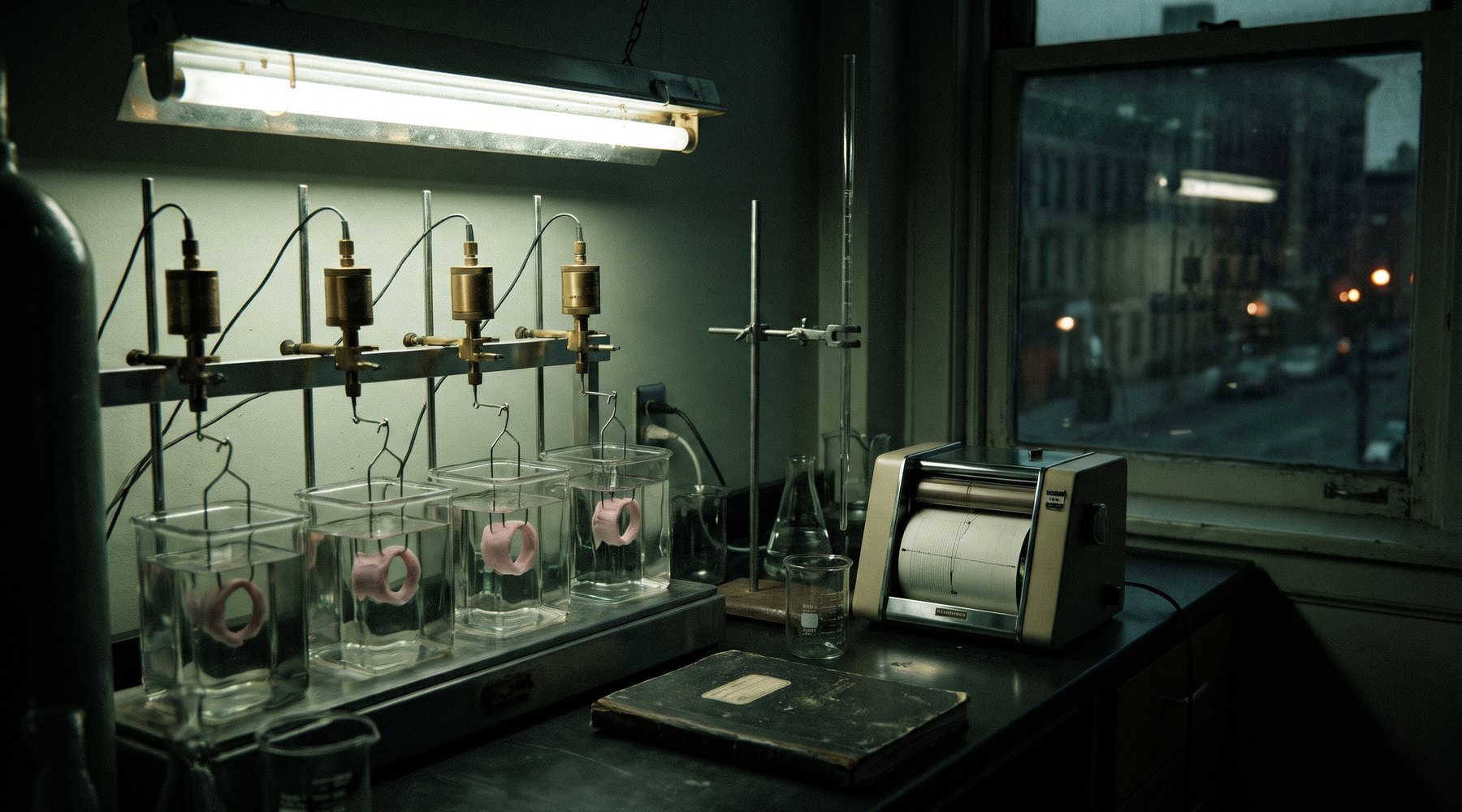
Brooklyn, 1980. One Strip of Artery.
There’s a reason a Nobel Prize discovery never made it into your checkup.
In 1980, in a pharmacology lab at the State University of New York in Brooklyn, Dr. Robert Furchgott was stuck on a contradiction. Eighteen years later, how he solved it would win him the Nobel Prize.
Inside a living body, a chemical messenger called acetylcholine opens blood vessels. In the lab, it did the opposite. Strips of artery tightened. For years that was the only response anyone had reported.
Then his team prepared a piece of artery a different way, as a ring, and the ring relaxed.
He went looking for the difference, and it turned out to be the handling. Preparing a strip meant its inner surface got rubbed against whatever it touched. The rubbing was wiping away a lining one cell thick.
When his team took care not to touch it, every piece of artery relaxed. Every one. (Furchgott and Zawadzki, Nature, 1980)
The artery wasn’t relaxing on its own. The lining was telling it to. It released a signal nobody could name yet, and for years labs had been scraping it off before they ran their tests.
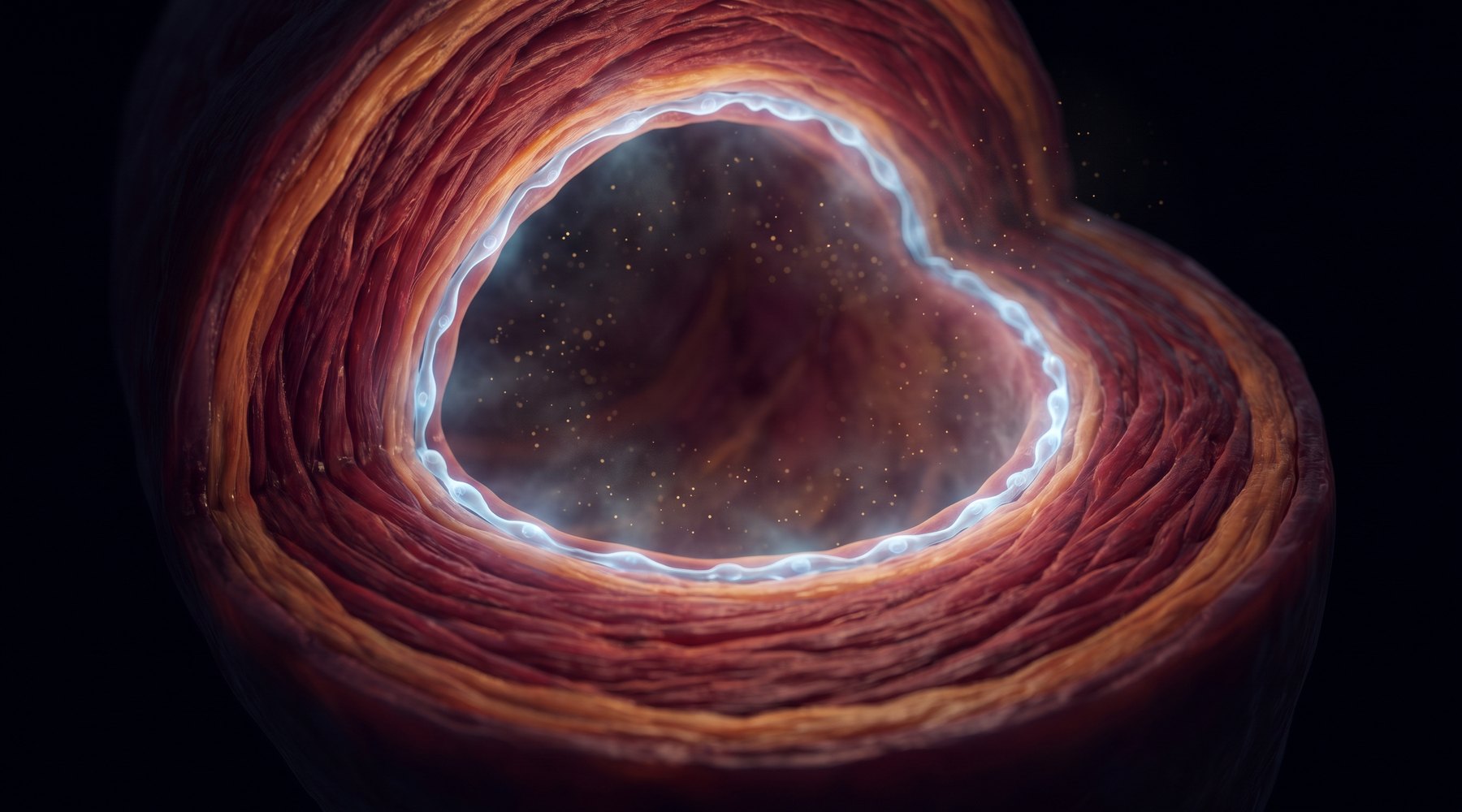
Your vessel wall is not a pipe. It’s muscle, wrapped around that one-cell lining, and the lining decides when it opens. When blood needs to get through, the lining sends the signal and the wall relaxes.
In 1986 Furchgott and a pharmacologist in Los Angeles, Louis Ignarro, each concluded that the signal was a gas: nitric oxide. Two years later a team at the Wellcome Research Laboratories in England showed what the lining builds it from. An amino acid called arginine. (Palmer, Ashton and Moncada, Nature, 1988)
In 1998 Furchgott, Ignarro and Ferid Murad shared the Nobel Prize in Physiology or Medicine “for their discoveries concerning nitric oxide as a signalling molecule in the cardiovascular system.”
Your lining was built to make that signal itself. The question nobody asked is what helps it keep doing that.
What the Supplement Aisle Sold Instead
Once the Nobel Prize made nitric oxide famous, the logic looked simple. Nitric oxide is built from arginine. So sell arginine.
There was a problem nobody put on the label. Arginine you swallow runs into an enzyme in your gut that breaks much of it down before it ever reaches your blood. A team at the University Medical Centre Hamburg-Eppendorf called it “extensive presystemic elimination.” (Schwedhelm et al., British Journal of Clinical Pharmacology, 2008)
And when cardiologists finally tested it where it mattered most, it went worse than anyone expected.
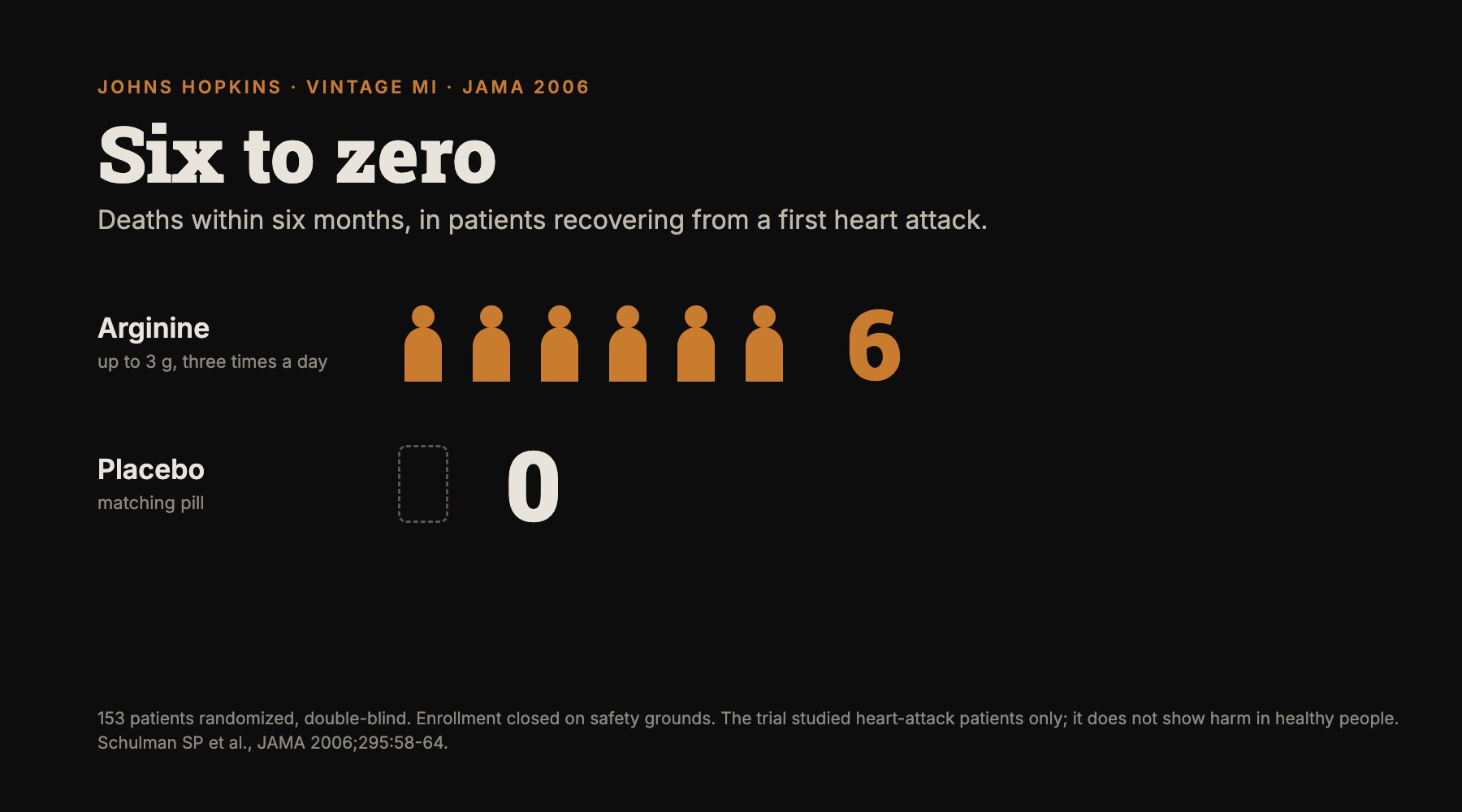
In 2006, cardiologists at Johns Hopkins tested arginine in the people who needed their arteries to work most: patients recovering from a first heart attack. 153 of them, randomized and double-blind, up to three grams three times a day or a placebo, for six months. The paper itself noted that arginine was “increasingly used as a health supplement.” (Schulman et al., JAMA, 2006)
Arginine did nothing for how stiff their arteries were. It did nothing for how well their hearts pumped.
And six people on arginine died. On placebo, none did.
The safety committee closed enrollment. The authors wrote that arginine “should not be recommended following acute myocardial infarction.”
This was a trial in heart-attack patients. It does not prove arginine hurts a healthy person, and I’m not telling you it does. But the molecule sold as the heart’s nitric oxide supplement was tested in the people who needed it most, did nothing, and the trial was stopped for safety.
While the aisle sold arginine, a people on a string of islands off Panama had never needed the aisle at all.

The Island Where Blood Pressure Didn’t Rise
Off the Caribbean coast of Panama sits a chain of small islands called the San Blas. The Kuna people live there. Doctors had noticed something strange about them for decades. They were among the first communities ever described whose blood pressure barely climbed as they got older.
In the 1990s Dr. Norman Hollenberg, of Brigham and Women’s Hospital and Harvard Medical School, went to see whether it was still true. His team enrolled 316 Kuna, aged 18 to 82.
Among the 92 who lived on the islands, not one had diastolic hypertension. The ones over 60 had blood pressure as low as the ones between 20 and 30.
Then the team measured Kuna who had moved to Panama City. There, blood pressure rose with age, the way it does for most of us. Past 60, more than 45 percent had hypertension. (Hollenberg et al., Hypertension, 1997)
Same people. Same ancestry. A different address.
Your first guess is probably salt. It was mine. It’s wrong. The island Kuna eat plenty of it. Their sodium was “exceeding substantially” what other communities free of hypertension take in. A later survey found the island Kuna added more salt to their food than the Kuna in the city did, and concluded their low blood pressure “does not seem to be related to a low salt diet.” (McCullough et al., Journal of Cardiovascular Pharmacology, 2006)
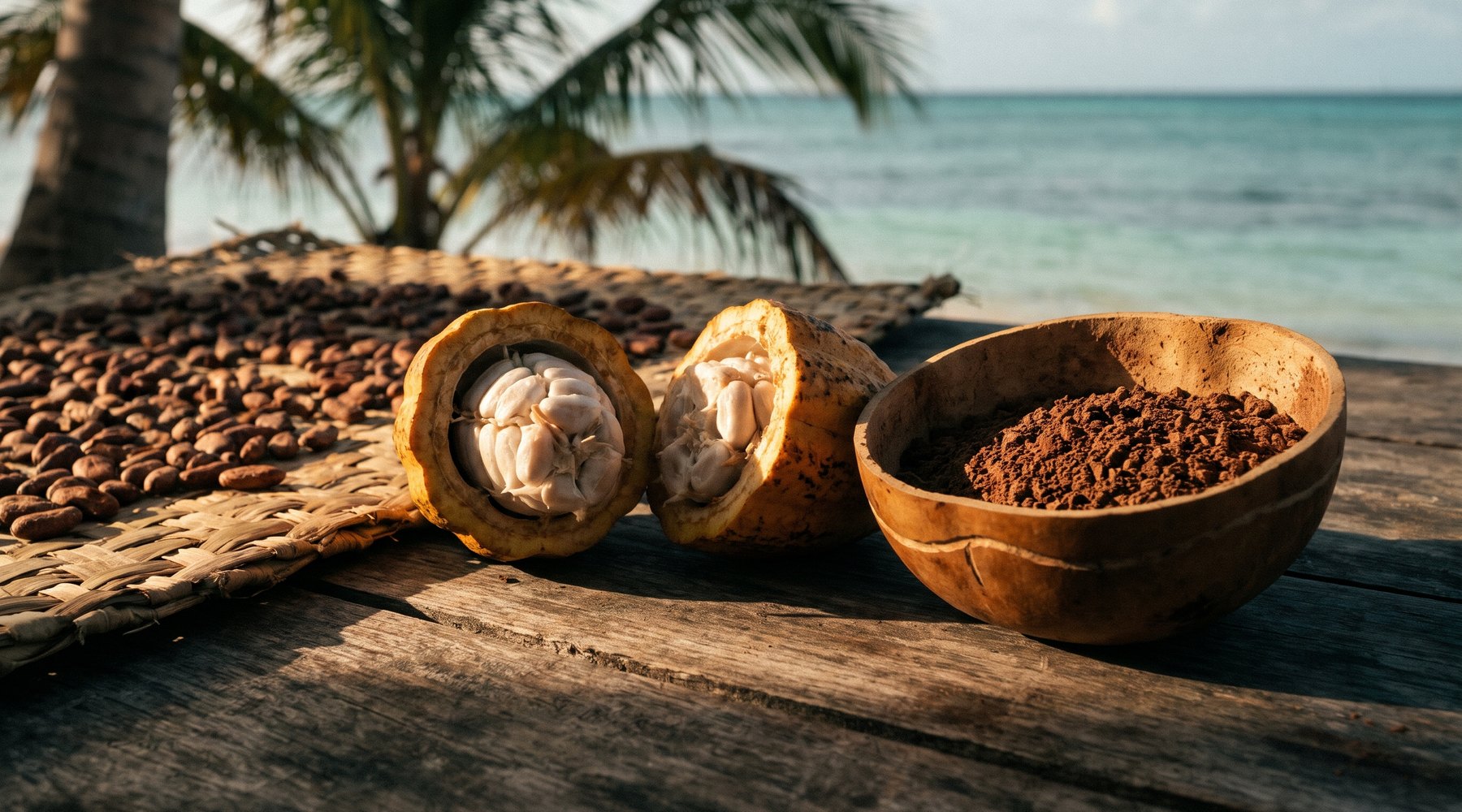
What Was in Their Cup
So the researchers went through what the island Kuna ate that the city Kuna didn’t. The island diet had more fish and more fruit. But one difference was far bigger than the rest.
The island Kuna drank ten times as many cocoa drinks as the Kuna in the city. (McCullough et al., 2006)
Not candy. Cocoa, as their main drink, rich in the plant compounds called flavanols. By the researchers’ estimate it gave them more than 900 milligrams of flavanols a day, “probably the most flavonoid-rich diet of any population.”
Then researchers at the University of Panama, with Hollenberg, pulled the death certificates. Every death in Panama from 2000 to 2004: 77,375 on the mainland, 558 on the islands.
On the mainland, cardiovascular disease killed 83.4 people per 100,000 a year, age adjusted. On the islands, 9.2. Cancer: 68.4 against 4.4. Diabetes: 24.1 against 6.6. (Bayard et al., International Journal of Medical Sciences, 2007)
I’ll give you their caveat in their own words, because it matters: “there are many risk factors and an observational study cannot provide definitive evidence.” Fish, fruit and island life could all play a part. An island can’t prove anything.
A lab can.
Harvard Blocked the Signal, and the Effect Disappeared
Hollenberg’s group brought the question back to Boston. They gave 27 healthy people a flavanol-rich cocoa every day for five days, 821 milligrams of flavanols a day, and measured the small arteries in their fingers.
The arteries opened. The paper calls it “consistent and striking.” On day five, one more serving opened them further.
Then came the test that ties it all to Furchgott. They infused a drug called L-NAME, which stops the body from making nitric oxide. The effect was “completely reversed.” And cocoa low in flavanols did much less. (Fisher et al., Journal of Hypertension, 2003)
Three years later, a team from the University of California, Davis and the University of Düsseldorf ran the version Furchgott would have recognized. They took rings of artery, the same kind of preparation he used in 1980, and bathed them in the mix of flavanols found in people’s blood after cocoa. The rings relaxed, “mimicking acetylcholine-induced relaxations,” the very response Furchgott’s 1980 experiment explained.
Block nitric oxide and the relaxation was “abolished.” In people, the same block erased the gain in how wide their arteries opened. And one pure flavanol from cocoa, epicatechin, “closely emulated” the whole effect on its own. (Schroeter et al., PNAS, 2006)
You should know who was in the room. Two of that paper’s authors worked for Mars, the candy company, and Mars helped pay for the work. The paper says so. I’d rather tell you than have you find it.
The island drink and the Nobel signal turned out to be one story. In these studies, the cocoa worked through the signal Furchgott found.
The $393 Billion Reason You’ve Never Heard This
I want to name the enemy here. It isn’t your doctor.
In 2024 the American Heart Association put the cost of caring for cardiovascular conditions in the United States at $393 billion in 2020, and projected it to almost quadruple, to $1.49 trillion a year by 2050. (Kazi et al., Circulation, 2024)
A bean gets none of that money.
A finding about a food travels the same six steps every time.
- It comes out of a bean. It cannot be owned.
- No ownership, no pivotal trial. Nobody spends hundreds of millions testing something their competitors can sell the next morning.
- No pivotal trial, no approved use.
- No approved use, no guideline. The executive summary of the 2019 ACC/AHA guideline on preventing cardiovascular disease runs more than 25,000 words. It does not mention cocoa once. Or flavanols. Or nitric oxide.
- No guideline, no billing code, no clinic workflow, no reminder in your chart.
- No billing code, no reason for anyone to bring it up in a fifteen-minute appointment.
End of the line.
A people whose sixty-year-olds had the blood pressure of their twenty-year-olds is on a supplement company’s blog in 2026 instead of in your chart. Nobody buried it. Nobody ever had a reason to dig it up.
Why Your Arteries Lose the Signal With Age
Your lining was built to do this on its own, and for most of your life it does.
The Nobel committee put the problem in one sentence in 1998: “In atherosclerosis, the endothelium has a reduced capacity to produce NO.”
And it doesn’t wait for disease. Researchers at the University of Pisa measured how well arteries opened in response to the lining’s signal in 96 adults of different ages. It declined with age, in people with normal blood pressure and in people with high blood pressure. In the people with normal pressure, the nitric oxide system faltered first, and wear from oxidative stress came later. (Taddei et al., Hypertension, 2001)
That’s the quiet part of getting older, and none of it shows up on your blood work.
What It Takes to Drink Like the Kuna
Don’t go buy a tin yet. Most cocoa has three problems.
1. It was stripped on purpose. A lot of cocoa is “Dutch processed,” treated with alkali to make it darker and milder. The more it’s processed, the fewer flavanols are left. In a survey of commercial powders, natural cocoa averaged 34.6 milligrams of flavanols per gram. Heavily processed cocoa averaged 3.9, about 89 percent less. (Miller et al., Journal of Agricultural and Food Chemistry, 2008) The Panama researchers said it plainly: “current processing reduces the content substantially.” Look for the words “processed with alkali” on the label.
2. The hidden amount. The island Kuna were getting more than 900 milligrams of flavanols a day. Hollenberg’s group used 821 in Boston. If a label doesn’t print a flavanol number, you have no way to know whether you’re anywhere near that.
3. The once-in-a-while cup. In the Boston study, the effect showed up after days of drinking it daily. On the islands it was the main drink, every day. A treat now and then is not what anyone measured.
What We’re Working On
The science isn’t new. Furchgott saw the lining in 1980. Hollenberg measured the Kuna in 1997. Harvard blocked the signal in 2003. The signal got a Nobel Prize. The aisle got arginine. The island had the better answer the whole time.
Let me be clear about one thing. The cocoa we make today is one of the strongest on the market: natural, non-alkalized, with its flavanol number printed right on the label. I stand behind every scoop.
But here at Black Forest, we don’t settle easily. We keep refining our formulas, expanding our research, and finding better ways to help Americans become their best selves.
So we’re revisiting our formula to create a limited-edition version built to tackle the problems in this story head-on. No stripped cocoa. No hidden amounts. No molecule your gut takes apart before it reaches your blood. Real flavanols, with the amounts on the label, made to support your body’s own nitric oxide production and healthy blood flow as the years add up, in something you’ll actually have every day.
And it doesn’t stop at the artery wall.
Last time I told you a heart attack is decided in two places your checkup never looks. This was the first one: the artery wall, and the signal that tells it to open. The new formula was built with both in mind.
The second place is what forms inside the vessel. There’s a second discovery behind the new formula, and it’s the one that changed how we built it.
That’s next.
Go look at the cocoa in your kitchen. Does the label say “processed with alkali”? Tell me in the comments. I read every one.
To your health,
Antonio
CEO, Black Forest Supplements
Editorial, for general education. Not medical advice. If you have had a heart attack or take any prescription, talk to your doctor before adding any supplement, and never start, stop or change a prescribed medication without them. These statements have not been evaluated by the Food and Drug Administration.
Sources, each opened and read Oct 27 2026
- Furchgott RF, Zawadzki JV. The obligatory role of endothelial cells in the relaxation of arterial smooth muscle by acetylcholine. Nature 1980;288:373-376 (SUNY Brooklyn)
- Nobel Assembly at Karolinska Institutet. The Nobel Prize in Physiology or Medicine 1998, press release (Furchgott, Ignarro, Murad; EDRF identified as NO in 1986)
- Palmer RM, Ashton DS, Moncada S. Vascular endothelial cells synthesize nitric oxide from L-arginine. Nature 1988;333:664-666
- Schwedhelm E et al. Pharmacokinetic and pharmacodynamic properties of oral L-citrulline and L-arginine. Br J Clin Pharmacol 2008;65:51-59 (Hamburg-Eppendorf)
- Schulman SP et al. L-arginine therapy in acute myocardial infarction: the VINTAGE MI randomized clinical trial. JAMA 2006;295:58-64 (Johns Hopkins)
- Hollenberg NK et al. Aging, acculturation, salt intake, and hypertension in the Kuna of Panama. Hypertension 1997;29:171-176 (Brigham and Women's Hospital)
- McCullough ML et al. Hypertension, the Kuna, and the epidemiology of flavanols. J Cardiovasc Pharmacol 2006;47 Suppl 2:S103-S109
- Bayard V, Chamorro F, Motta J, Hollenberg NK. Does flavanol intake influence mortality from nitric oxide-dependent processes? Int J Med Sci 2007;4:53-58 (University of Panama)
- Fisher ND, Hughes M, Gerhard-Herman M, Hollenberg NK. Flavanol-rich cocoa induces nitric-oxide-dependent vasodilation in healthy humans. J Hypertens 2003;21:2281-2286 (Harvard Medical School)
- Schroeter H et al. (-)-Epicatechin mediates beneficial effects of flavanol-rich cocoa on vascular function in humans. PNAS 2006;103:1024-1029 (UC Davis, Duesseldorf; Mars Inc. co-authors and partial funding, disclosed)
- Miller KB et al. Impact of alkalization on the antioxidant and flavanol content of commercial cocoa powders. J Agric Food Chem 2008;56:8527-8533
- Kazi DS et al. Forecasting the economic burden of cardiovascular disease and stroke in the United States through 2050. Circulation 2024 (AHA presidential advisory)
- Arnett DK et al. 2019 ACC/AHA Guideline on the Primary Prevention of Cardiovascular Disease: Executive Summary
- Taddei S et al. Age-related reduction of NO availability and oxidative stress in humans. Hypertension 2001;38:274-279 (University of Pisa)